

There is a certain safety in a neutral interior. Whites, creams and beiges are easy to live with and, when handled well, can create incredibly beautiful rooms. But colour has the ability to bring something else to a home: personality, atmosphere and a sense that the interior belongs specifically to the people living in it.
For us, the aim is not simply to make a room more colourful. It is to find colours that add something to the space and make the overall scheme feel richer, more layered and more individual.
Look beyond beige
When clients are nervous about colour, the instinct is often to begin with a neutral backdrop and introduce colour later through cushions, artwork and accessories. While this can work, it can also mean missing an opportunity to give the room a stronger identity.
Colour doesn’t always need to be treated as an accent. Allowing it to occupy a larger part of the room – on the walls, curtains, upholstery or joinery – can make a scheme feel more resolved. And that doesn’t necessarily mean using particularly bright shades. A colourful interior can be soft, muted and incredibly liveable.
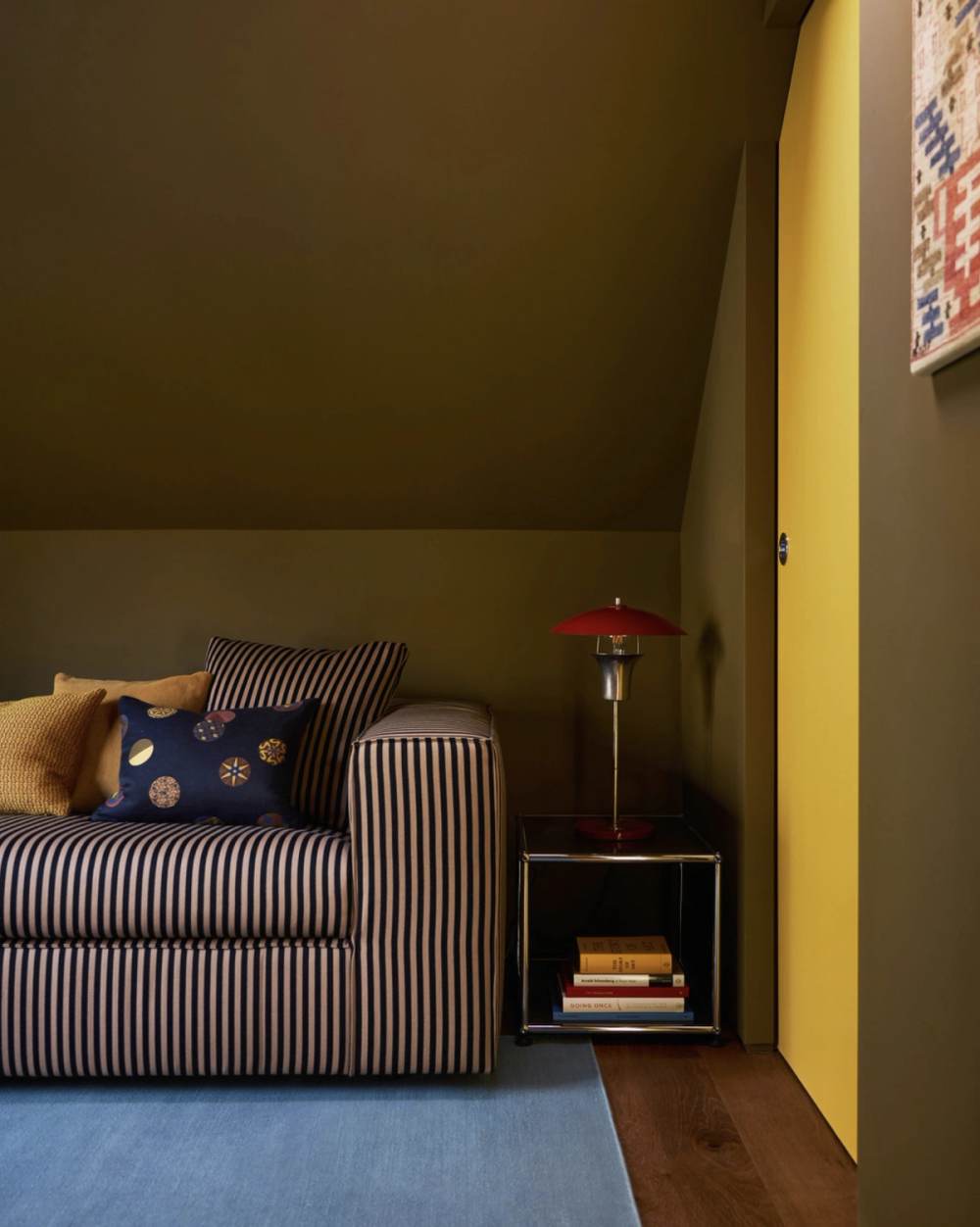
Start with a colour you love
Rather than asking what colour is safest, we often find it more useful to identify a colour, fabric or material that you genuinely love.
It might be the blue running through a favourite piece of artwork, the burgundy within a patterned textile or the colour of a particular stone. That initial choice can become the thread from which the rest of the scheme develops.
Build your colour palette
A colourful room doesn’t need to revolve around one ‘accent colour’. In fact, repeating exactly the same shade across cushions, artwork and accessories can sometimes make a scheme feel contrived.
Instead, think about a family of colours. There might be one or two that lead the scheme, with several quieter colours sitting alongside them. A deep green could be paired with dusty blue, warm brown, burgundy or even an ochre, for example. But they don’t (and shouldn’t) need to appear in equal quantities; it is the relationship between them that matters.
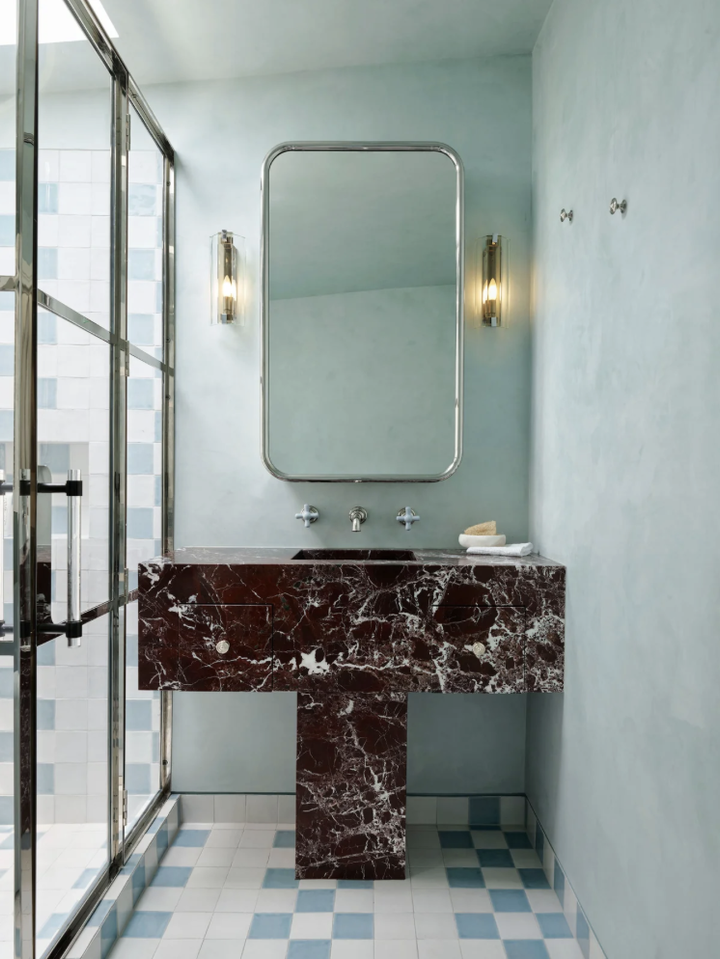
Introduce something unexpected
Some of the most interesting interiors contain colour combinations that aren’t immediately obvious. Burgundy against pale blue, olive green with lilacs, or an ochre yellow introduced into a cooler palette can add just enough tension.
Pattern is particularly helpful here. A patterned curtain, rug or upholstered chair might contain several seemingly unrelated colours and provide the link that allows them to sit together elsewhere in the room. Sometimes a small amount of an unexpected colour is enough to stop a room from feeling overly designed.
Know where to be brave
Once you’ve established the palette, think about where stronger colours could have the most impact. Joinery is one place we particularly enjoy introducing colour: a kitchen, wardrobe or freestanding cabinet in an unexpected shade can create a focal point without requiring the entire room to be bold.
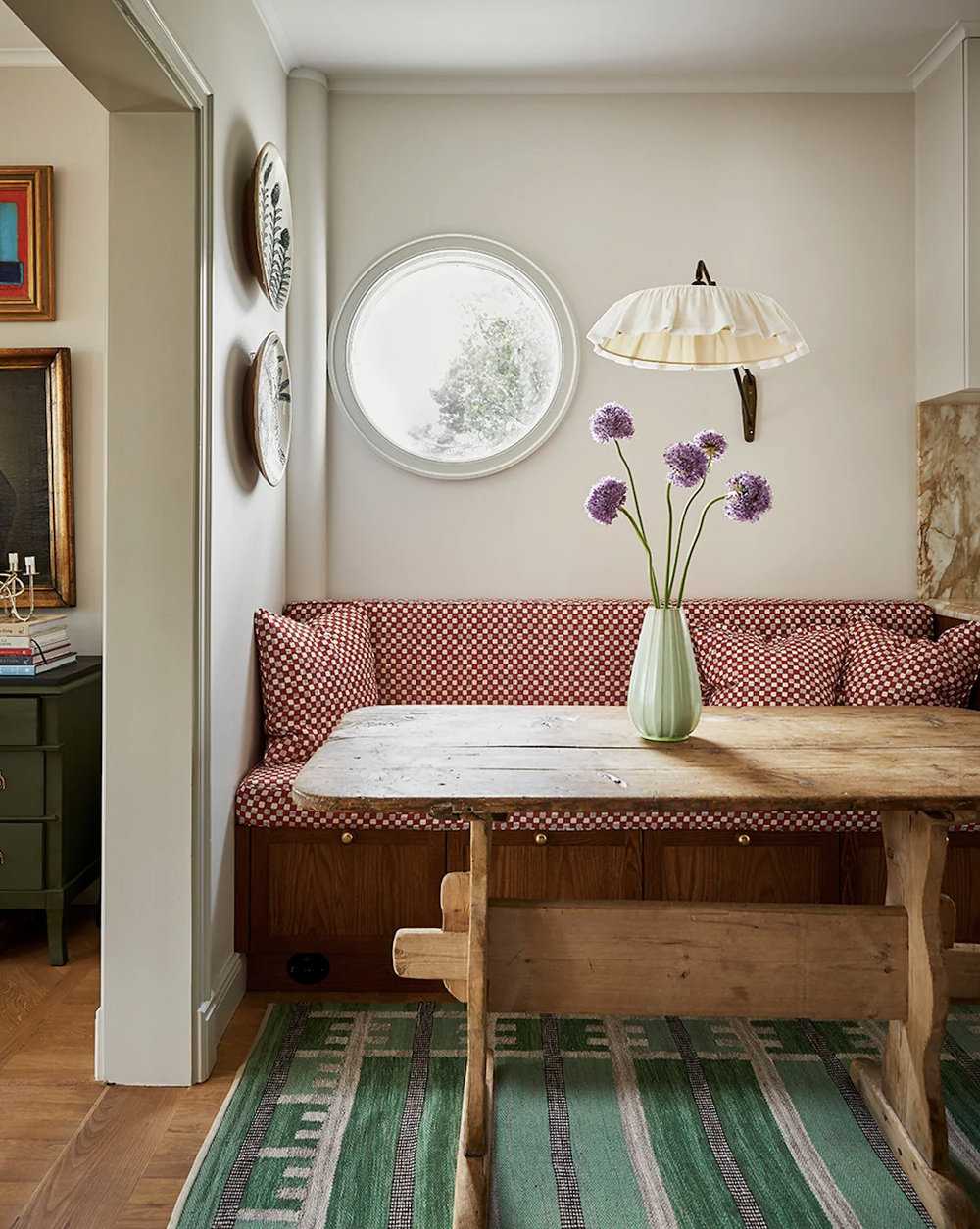
Smaller spaces, such as a downstairs WC, pantry or snug, are also good places to experiment and can often carry a stronger idea.
Being brave doesn’t have to mean using colour everywhere. We love how Cathy Nordström’s Faye fabric on a banquette brings a confident moment of colour to an otherwise neutral room. At the other end of the scale, Tobias Vernon’s recent project celebrates colour throughout, with the colour-drenched guest bedroom being a particularly good example of fully committing to a palette.
Allow each room to have its own character
One of the joys of designing with colour is that every room doesn’t need to feel the same. A darker sitting room might lend itself to a deep, enveloping palette, while a light-filled kitchen next door could feel completely different.
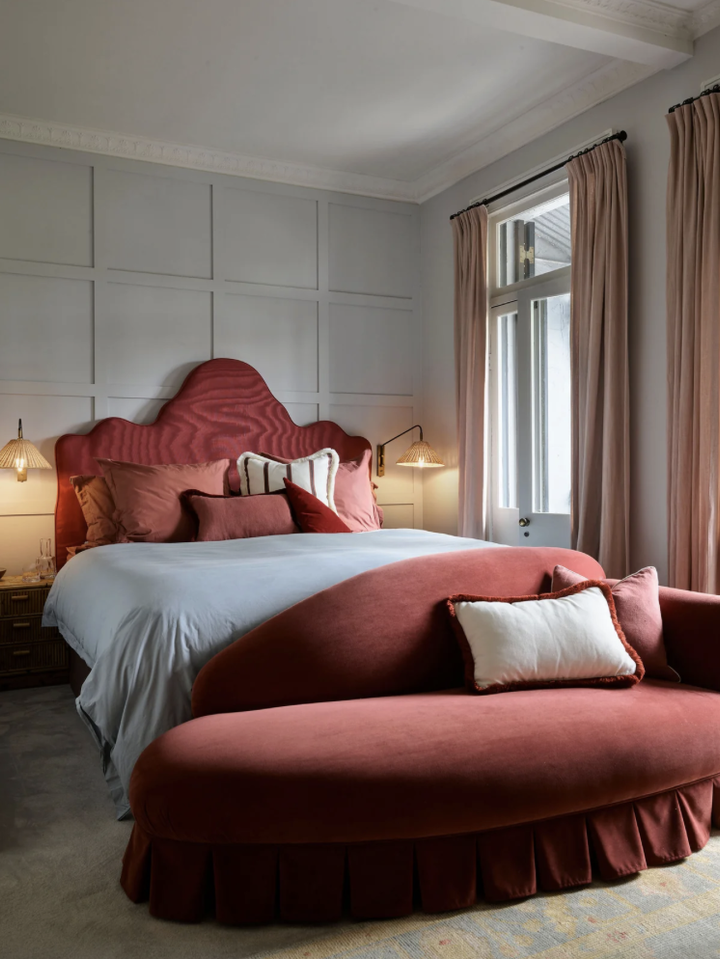
Instead, find smaller connections between spaces. We love how Tamsin Johnson approaches this in this master suite, where the soft blue bathroom is contrasted by a burgundy marble vanity. Both colours continue into the adjoining bedroom in different ways, allowing the rooms to have their own identities while clearly belonging together.
A home with character
There will always be a place for neutral interiors, but neutral doesn’t have to be the default.
The most successful schemes often have enough repetition to hold everything together, enough variation to create depth and perhaps one or two unexpected combinations that give the room its character.
A home doesn’t need to be neutral to feel timeless. When colour is considered alongside the architecture, materials and furniture from the beginning, it can be every bit as liveable and enduring – and, we think, considerably more interesting.
